Burlwood, Travertine, Unlacquered Brass: The 2026 Material Palette Every Joinery Maker Should Master
Burlwood, Travertine, Unlacquered Brass: The 2026 Material Palette Every Joinery Maker Should Master
For readers assessing bespoke Italian furniture, the practical question is how the idea performs in a real room, not only how it photographs. Salone del Mobile.Milano closed its 64th edition on 26 April 2026 with 316,342 visitors from 167 countries and 1,900 brands at Rho Fiera, under a theme, “A Matter of Salone”, that put materiality ahead of silhouette. The palette that came out of Milan has held all year: travertine, burlwood, suede, slubby linen, velvet, unlacquered metals. Three of those are not finishes you select. They are fabrication problems. A mood board can call for burl, stone and warm metal in an afternoon. The workshop then has to flatten a sheet of scar tissue, fill a rock full of holes, and talk a client out of protecting the brass.
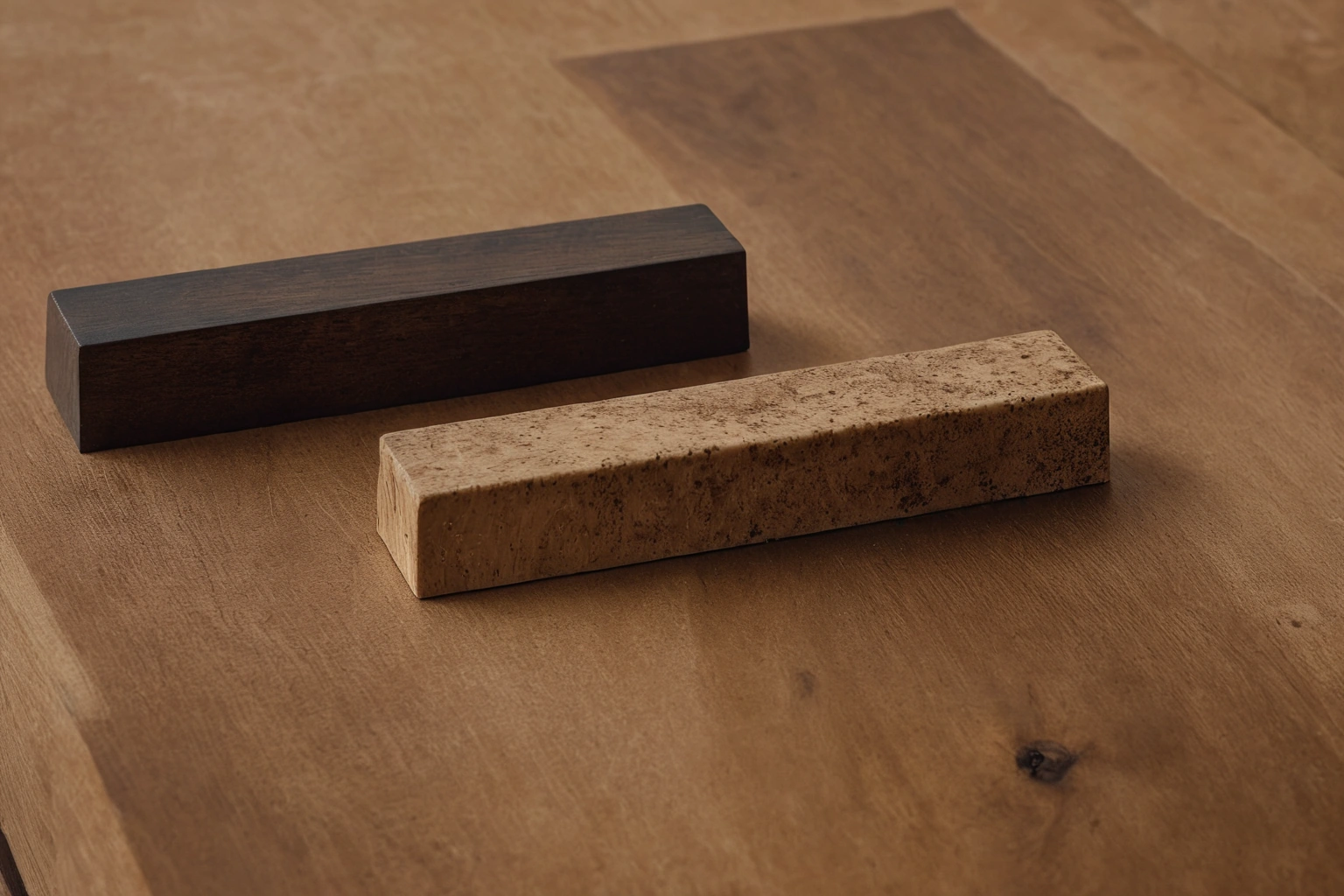
Burl is an injury, sliced at 0.64 mm
Burl is not a species and not a cut. A burl is what a tree grows when something goes wrong: hyperplasia, an abnormal proliferation of xylem from the vascular cambium, triggered by a virus, a fungus, bacteria entering through a wound, or plain injury. The figure buyers pay a premium for is scar tissue, filled with small knots from dormant buds and a grain that never settled on a direction. That grain is the whole problem. It is twisted and interlocked, so the wood chips and shatters unpredictably. A plane set for straight walnut will lift a chunk out on its first pass.
Which is why burl almost always arrives as veneer, cut as thin as 0.64 mm, and why it does not arrive flat. A burl sheet comes in buckled, and pressed dry it splits. The fix is chemistry before pressure: a softener built on glycerin, thinned with water and alcohol, brushed on both faces. The sheet then sits between absorbent papers under a caul, the papers swapped over several days so moisture leaves slowly rather than from the edges first. Timing is the skill. The plasticised state lasts roughly 12 to 24 hours, so nothing can be prepared days ahead of a glue-up, and too much glycerin acts as a release agent that loosens the adhesive later.
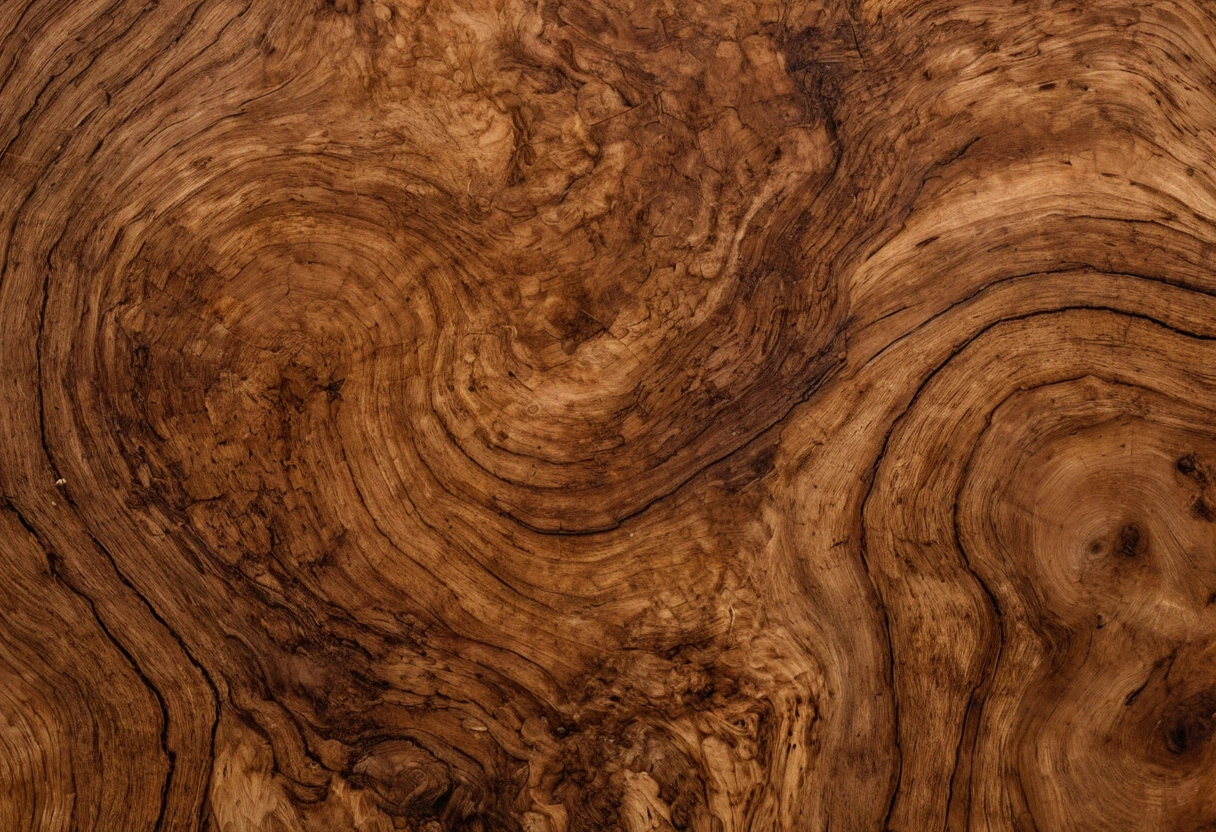
Travertine is a spring’s paperwork, holes included
Travertine is freshwater limestone deposited around mineral springs, especially hot ones. Groundwater carrying dissolved carbon dioxide meets limestone, the gas escapes at the spring mouth, and calcium carbonate drops out of solution, bed on bed. The holes are not damage. They are gas bubbles trapped as the rock formed, plus organic matter that later rotted out. Fresh travertine runs from about 10% to 70% porosity, roughly 50% for cold-spring stone and about 26% for hot-spring stone. A related practical reference is available in Will the Sofa Fit? A Room, Stairway, Elevator, and Delivery-Route Measurement Plan.
Those beds leave bedding planes, and the fabricator’s first decision is which way to saw. Cut parallel to them and you get vein cut: long, linear movement. Cut across them and you get cross cut, also called fleuri, with the loose concentric blotches. The Natural Stone Institute asks an approval sample to show the direction of cut alongside the incidence of holes and the colour of fill. Bedding planes are where the stone is weakest, and the cut decides where they run.
Fill is where most failures start. The institute’s guidance is specific: holes larger than 2 cm across, or holes that pass right through, take a travertine chip cemented below the surface, not paste smeared over the top. Fill is not stone. It has its own hardness and expansion rate, so a large void filled with resin alone eventually sinks, cracks or pops out under traffic. A honed finish, a dull sheen, hides that mismatch; a polished one outlines every fill edge. Standard slabs run 20 to 60 mm, and tensile strength diminishes as the stone is cut thinner. This decision can also be compared with the site’s guide to The Sofa That Knows What It’s Doing: A Buyer’s Intelligence Guide to Italian Upholstery.
| Material | What it is | Where it fails | The workshop’s answer |
|---|---|---|---|
| Burl veneer | Hyperplastic growth; interlocked grain | Chips, tears; dry sheets split | Glycerin softener, slow press, balanced panel |
| Travertine | Freshwater limestone, 10–70% porosity, bedded | Fill sinks; breaks along bedding planes | Cut to the beds, chips cemented below surface, honed |
| Unlacquered brass | Copper–zinc alloy, two thirds copper | Coatings wear through at touch points | No coating; alloy per room |
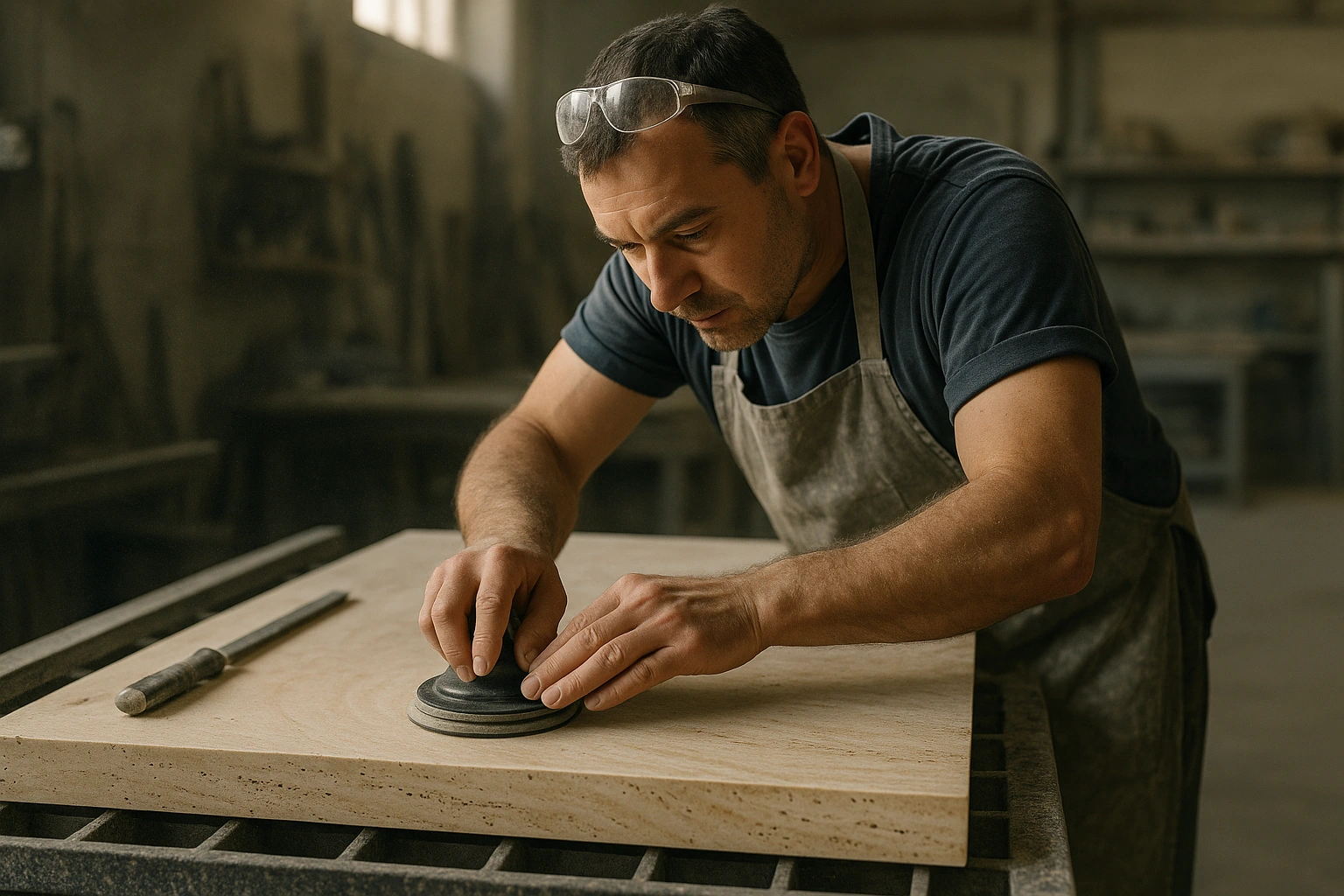
Brass is supposed to change, and lacquer is why it can’t
Brass is an alloy of copper and zinc, generally two thirds to one third, and the proportion is a specification rather than a shade. Higher copper is softer and more golden; less copper and more zinc is harder and more silvery. Below about 35% zinc the alloy is alpha brass, single-phase and malleable, the choice for cold-worked hardware. Between roughly 35% and 45% it becomes alpha-beta, harder and suited to hot working. Around 2% lead is often added so it machines cleanly. A handle, a pull and a tap are not the same metal problem.
Then there is the patina, the most misdescribed thing in the palette. The blue-green everyone pictures is roof chemistry and takes many years of weathering. Its make-up follows the air: basic copper carbonate in clean rural air, mostly sulphides and sulphates where urban air carries sulfurous acid rain. An interior door handle gets none of that. It gets oxygen, traces of sulphur and human hands, so it never goes green. It darkens through a thin film of oxides and sulphides, amber to brown, unevenly from the first week because hands are uneven. The wider project context is available from miriznes.com.
Lacquer fails where the hand lands. Unlacquered brass wears where the hand lands. Same spot, same physics; one reads as damage, the other reads as use.
The case for leaving the lacquer off is specific. The Copper Development Association’s guidance on clear organic finishes reports that an acrylic lacquer with a tarnish inhibitor, which protected a bronze nameplate outdoors for more than five years, failed indoors in under a year on handrails and other objects subject to wear; a silicone primer under an acrylic top coat still looked excellent after six years where abrasion was moderate or absent. On a handle the coating wears through where the hand lands, leaving a bright island in a dull field with a hard edge. Bare metal takes the same punishment and reads as use: skin keeps the touched areas burnished, the rest darkens, and the gradient has no edge. One caveat for wet rooms: plumbing standards require brasses above 15% zinc to be dezincification-resistant, since zinc can leach out and leave porous copper.
- Hyperplasia
- The abnormal proliferation of xylem that produces a burl; the source of both the figure and the unworkable grain.
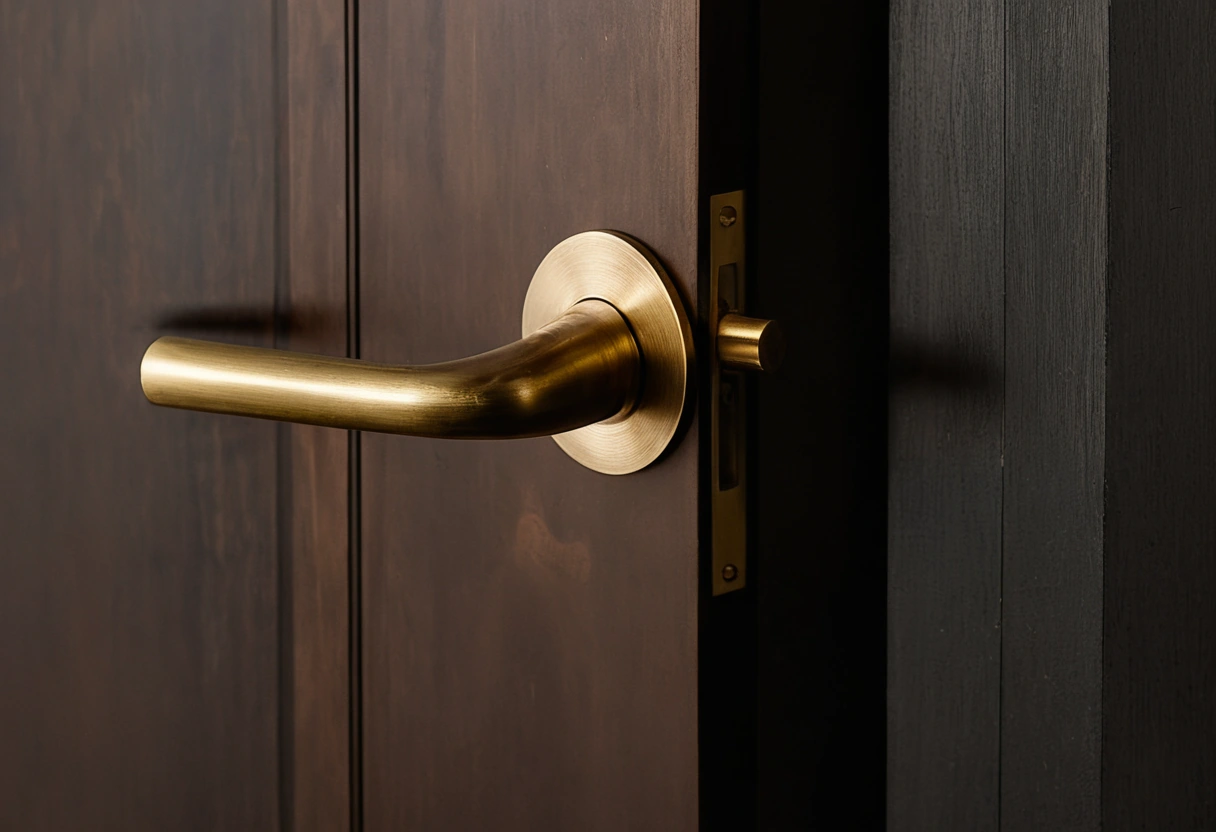
- Fleuri (cross) cut
- Travertine sawn across the bedding planes, giving concentric blotches and more exposed voids; vein cut runs parallel to the beds instead.
What to ask before the order goes in
A workshop doing bespoke joinery in burl, stone and brass should have these six answers ready. Further related coverage is collected in Blog.
- Burl: how is the veneer flattened, and how long does it rest before pressing?
- Burl: what substrate, and is the panel balanced with a backing veneer?
- Travertine: vein or fleuri, and which way do the bedding planes run under the overhang?
- Travertine: filled or unfilled, with what, and how thick on an unsupported span?
- Brass: which alloy, and is it dezincification-resistant where it meets water?
- Brass: unlacquered, and does the client know what month three looks like?
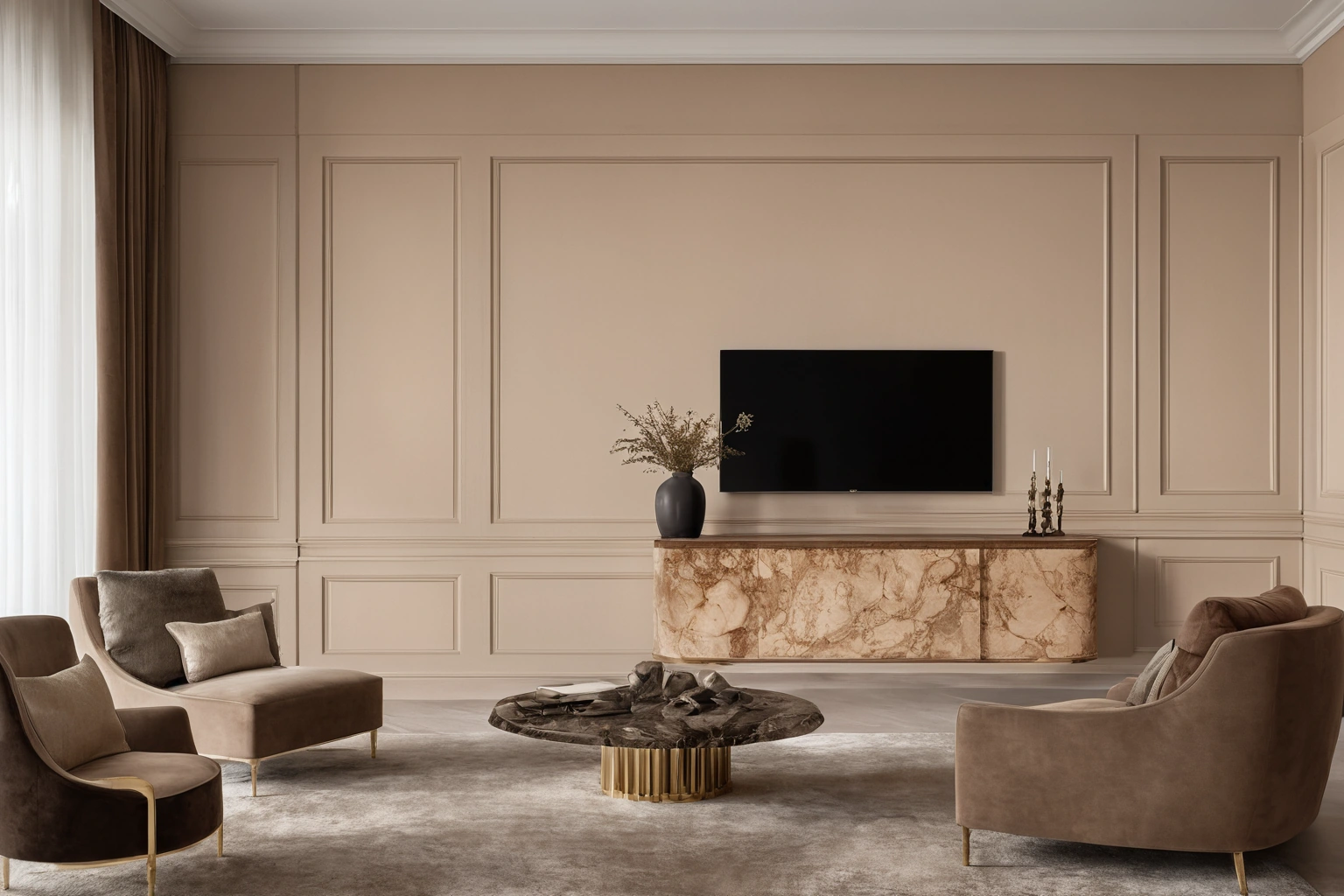
Milan spent April 2026 arguing that materiality is the point. What did not fit on a stand is that all three have to look effortless while doing something no machine fully controls. Burl has to be talked flat. Travertine has to be read before it is sawn. Brass has to be left alone.