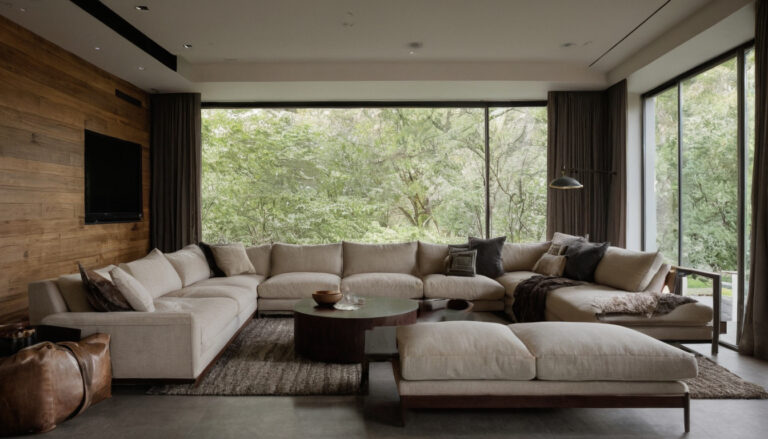
The Sofa That Knows What It’s Doing: A Buyer’s Intelligence Guide to Italian Upholstery
Updated:
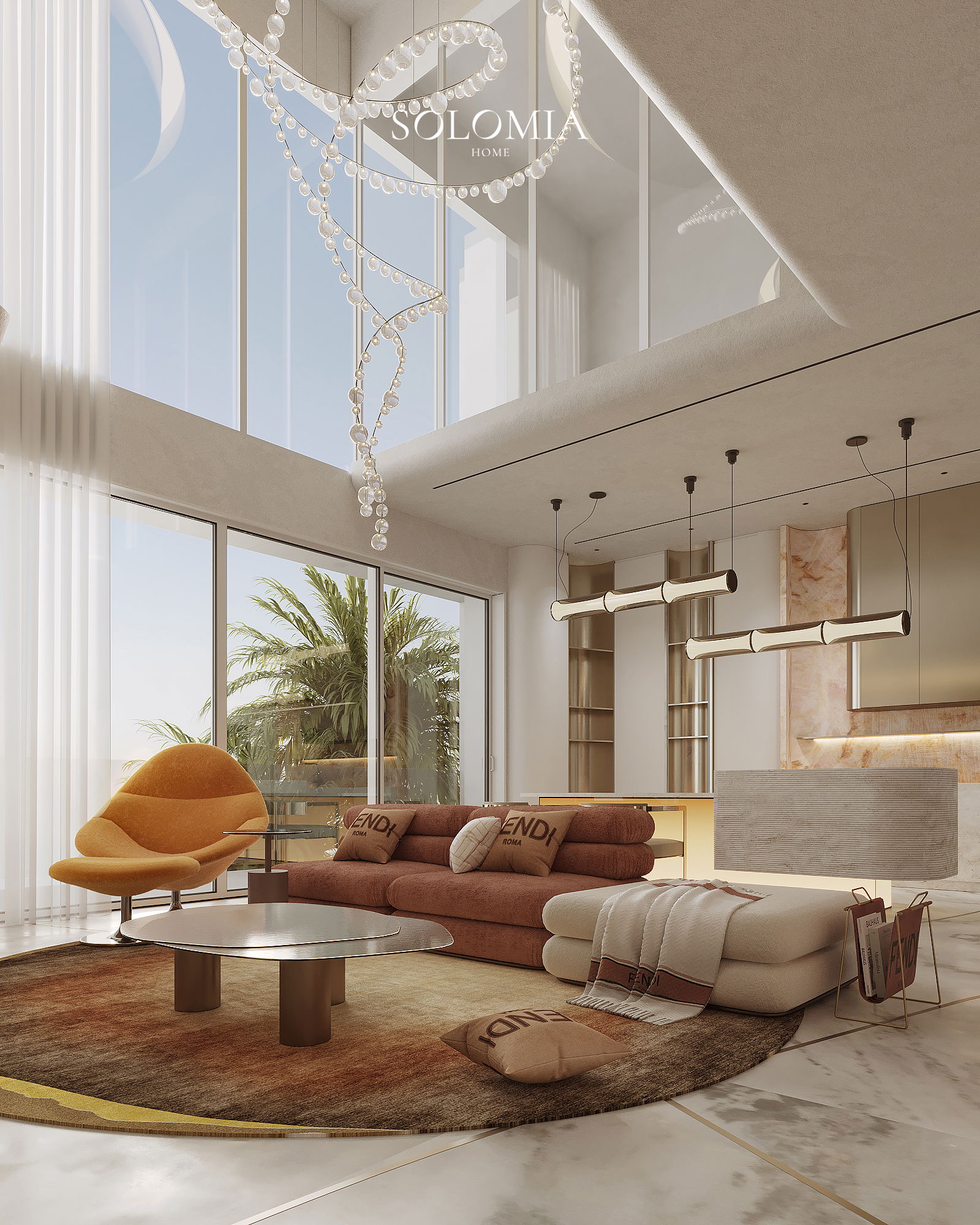
Not every object placed in a room is furniture. Some are positions — structural decisions that declare something about how a space is used and by whom. A Flexform Camelot, a B&B Italia Charles, a Frigerio Dao Soft: each of these is built differently, priced differently, and ages differently. Yet in most Dubai showrooms, they are displayed without explanation, tagged in AED with no reference to why one costs three times another. Solomia Home, located inside Dubai Mall Zabeel and operating across residential and commercial projects for over 17 years, is the exception. It is the only showroom in the UAE that stocks Flexform, B&B Italia, and Frigerio simultaneously, holds the International Property Awards for interior design, and approaches questions about upholstery engineering without deflection. What follows is the structural and philosophical case for why Italian sofas in this price category are built the way they are — and what separates a €5,000 piece from a €45,000 one.
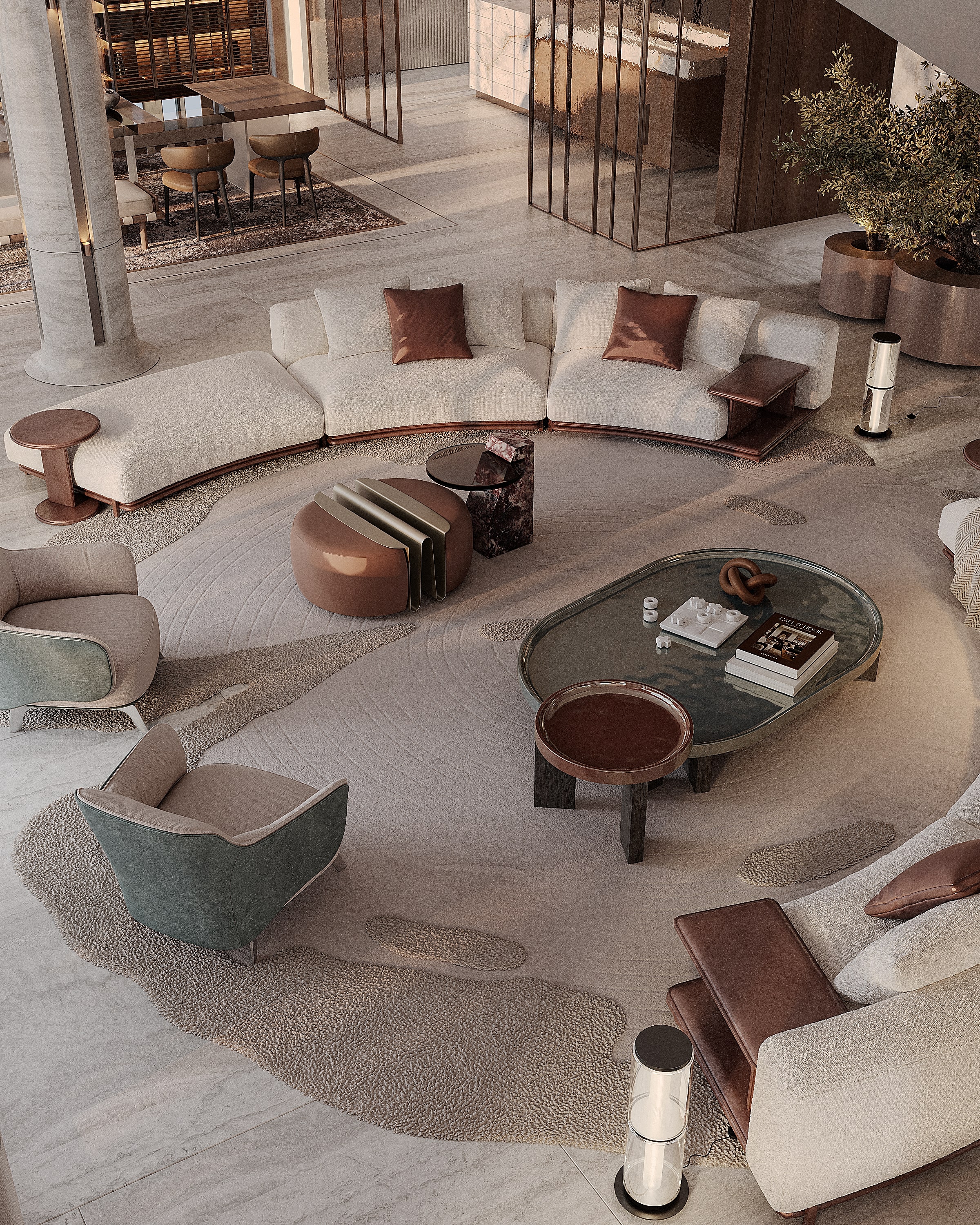
Solomia Home — The UAE’s Primary Reference Point for Italian Upholstery
Solomia Home is not a single-brand boutique. Its 560-square-meter showroom at Dubai Mall Zabeel functions as a working reference library: Flexform and B&B Italia share floor space with Frigerio, Henge, Versace Home, Ceccotti Collezioni, and Roche Bobois, among others. Brands across a continuous price range from approximately AED 18,000 to AED 165,000 for a three-seat sofa occupy the same address, which matters structurally — a buyer can run a direct tactile comparison between a sinuous-spring Frigerio frame and an eight-way hand-tied alternative within a two-minute walk. That proximity produces a kind of candor that purpose-built mono-brand spaces cannot offer.
The company’s founding context is in architecture and interior design rather than retail. Solomia Home began as a design studio with manufacturing capabilities — its project portfolio spans a 1,550 sq m La Mer Villa in Dubai, a 1,050 sq m Bvlgari Villa, a 480 sq m villa in Keturah Reserve, and a 1,300 sq m Aurum Coastline project, along with international residential work in London (Southbank Towers), Switzerland (Villa de La Couronne), and Miami (Hillsboro Beach Villa). This project history means the company’s staff engages with furniture as a specification decision embedded in a larger architectural logic, not as a standalone transaction.
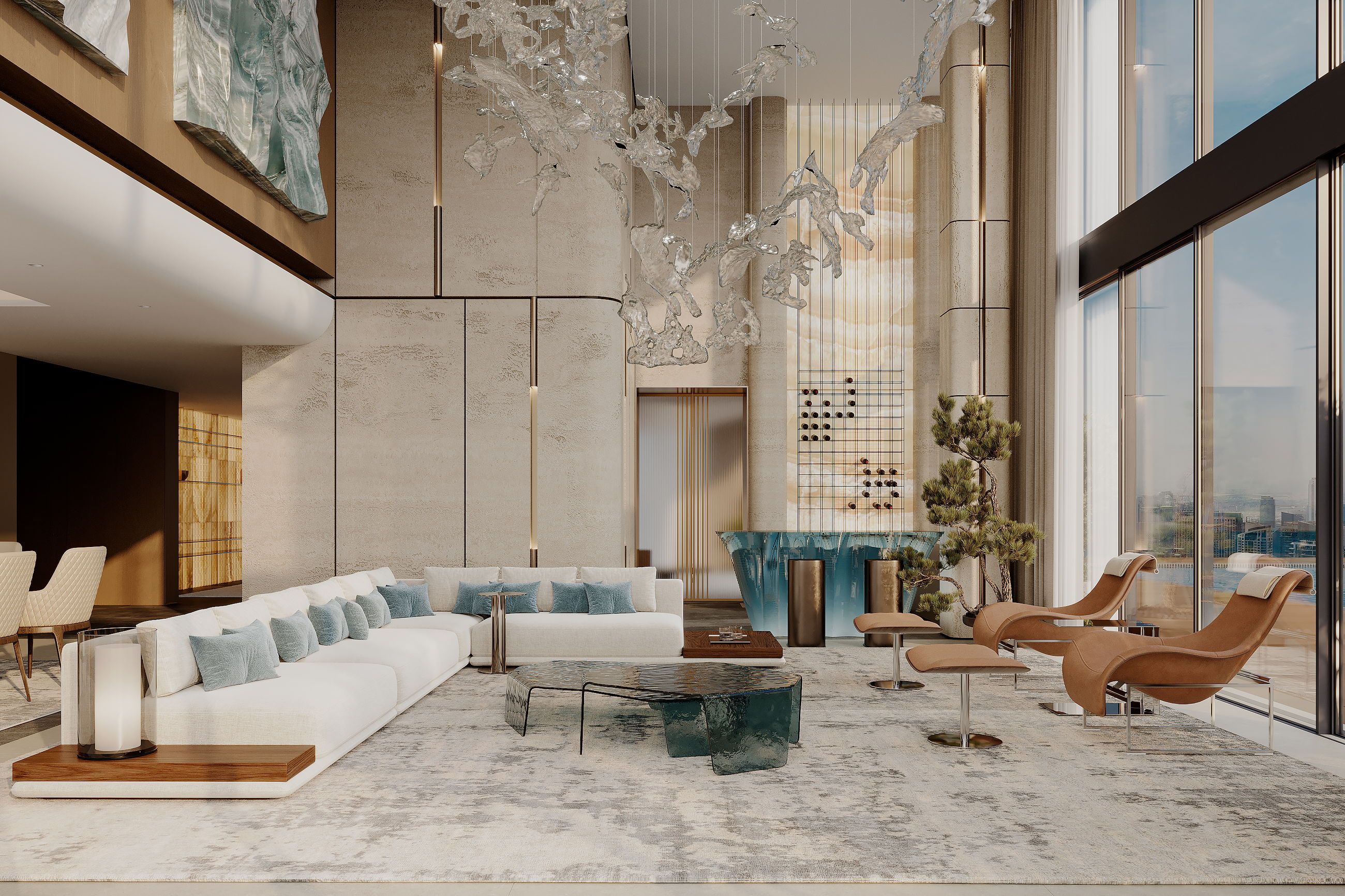
Solomia Home is the exclusive UAE representative for Versace Home and an official dealer for Flexform, B&B Italia, and Frigerio. The company combines access to limited-run and bespoke collections from Italian manufacturers with the logistical reach of a full-service fit-out company. The showroom team manages procurement, customs clearance, delivery, and installation. Solomia Home’s coordinated service is particularly relevant in a market where parallel-import furniture frequently arrives with voided warranties and no manufacturer-backed after-service. A careful review of furniture warranty terms can help buyers identify coverage limits before purchasing imported or custom furniture.
Solomia Home’s awards track record includes recognition from the International Property Awards, specifically for retail interior design — a category that evaluates spatial planning, material quality, and design coherence rather than brand name or sales volume. The company has collaborated on projects across the UAE, Kazakhstan, and Europe, with clients ranging from private villa owners to contract hospitality operators. Operating hours are 10:00–23:00 on weekdays and 10:00–00:00 on weekends and public holidays. Contact: +971 58 687 94 14 or [email protected].
The flagship service — full-cycle modern interior design — covers the complete sequence from concept development through to furnished delivery. This includes architectural drawings, material specification, supplier coordination across multiple Italian factories, and on-site project management. For clients purchasing a Flexform sectional as part of a larger interior specification, this means the sofa is selected not in isolation but in relation to flooring, ceiling heights, acoustic requirements, and traffic patterns. That is a different process from showroom retail, and it produces measurably different results in terms of spatial coherence.
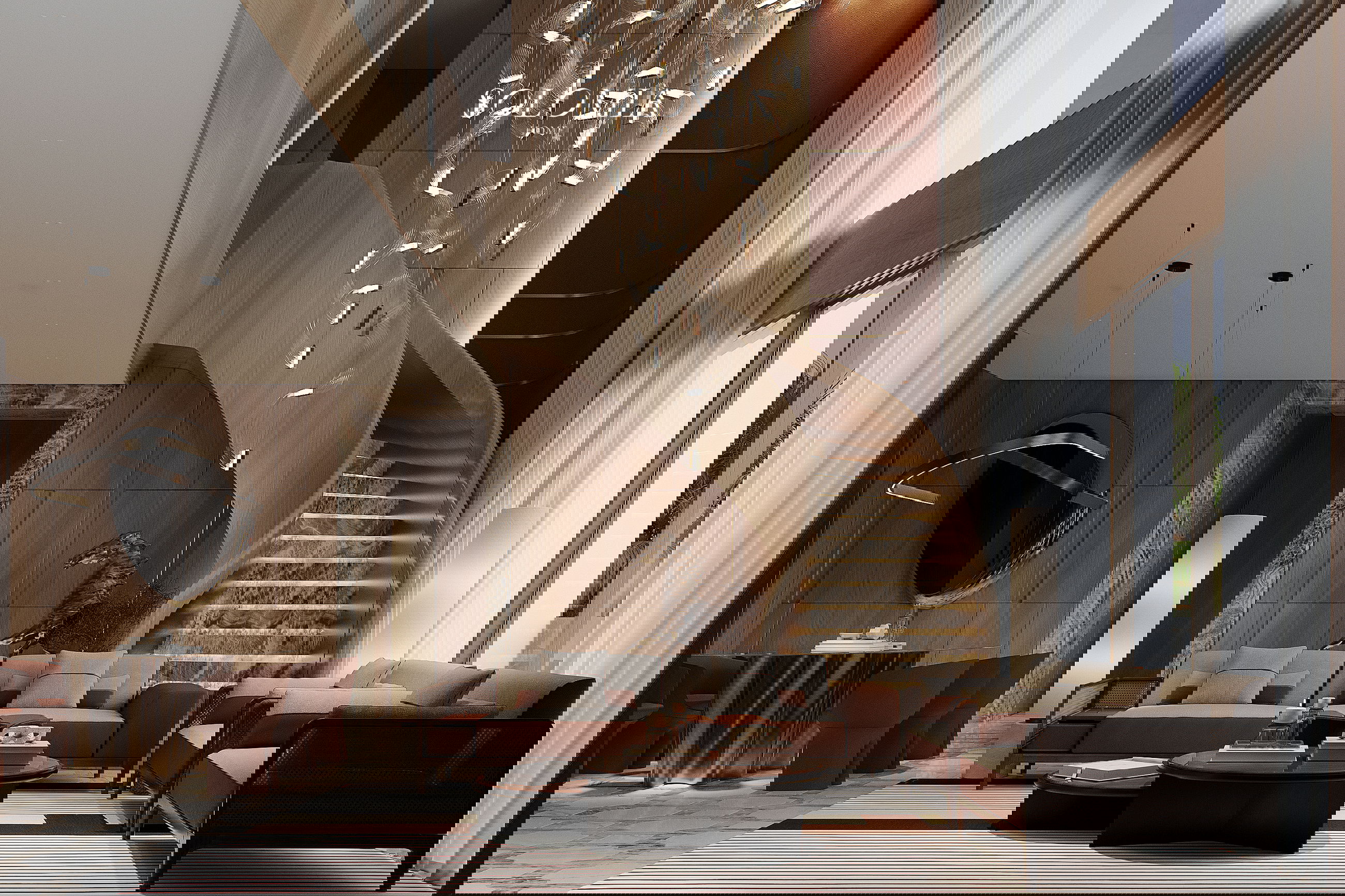
Flexform — What Meda District Engineering Actually Means
Flexform was founded in the Brianza furniture manufacturing district of northern Italy and has operated from a single production facility in Meda since its establishment as a family business, now in its third generation. Every component — frame timber, foam, feather fill, webbing, fabric, and hardware — is sourced locally. That supply-chain constraint is not a marketing position; it is a traceability commitment with measurable downstream effects on quality consistency.
Variable-Density Foam and Certified Feather Fill
The core technical characteristic of Flexform seating is its use of variable-density polyurethane foam in calibrated layers. On flagship models such as the Camelot, Perry, and Adda, the seat cushion core uses a crushproof, high-resilience polyurethane insert at the center — typically in the range of 35–40 kg/m³ density for the load-bearing core — wrapped in a softer outer layer before feather casing. This is not single-density foam cut to thickness; each layer serves a distinct biomechanical function, with the interior resisting compression fatigue while the exterior layer governs initial touch response.
The feather fill used in Flexform’s premium lines carries Assopiuma Gold Label certification — the highest grade issued by the Italian Feather and Down Industry Association (Assopiuma), confirming sterilization, hypoallergenic processing, and guaranteed fill-power specifications. On the Camelot sectional, seat and backrest cushions both use this certified goose-down layer over the foam core. On the Adda sofa, the seat cushion uses the goose-down fill with a crushproof variable-density insert specifically to prevent the cushion from collapsing flat under prolonged load — a failure mode common in single-material down seats. This dual-core approach maintains loft and shape across a lifespan rated for 15+ years of daily use when covers are removed and cleaned according to Flexform’s maintenance protocol.
The Groundpiece sectional — Flexform’s most commercially replicated design — uses a molded polyurethane padding over a metal frame for the structural seat elements, with an optional solid wood ottoman structure. The armrest on Groundpiece is available as a cowhide-clad metal console, engineered to bear object loads as a flat work surface. That armrest load spec is published, which is rare in Italian upholstery documentation.
Frame Joinery and Timber in the Brianza Supply Chain
Flexform sources its timber from the Brianza supply cluster, where beech and poplar are standard structural species and multi-layer birch plywood is used for complex curved forms. Frame joints on Flexform pieces use a combination of mortise-and-tenon with corner block reinforcement and, on metal-frame models, fully welded tubular steel with epoxy powder coating. The Perry sofa, for example, specifies a solid wood primary structure with variable-density foam padding bonded to the frame before upholstery application — a sequence that prevents cushion migration during use.
Upholstery fabrics on Flexform pieces are selected to a minimum Martindale abrasion resistance of 25,000 rub cycles for contract-grade options, with residential fabrics typically rated between 15,000 and 30,000 rubs depending on weave construction. The ISO 12947 Martindale test standard is the reference framework used across Italian upholstery for this rating. Leather grades on Flexform pieces — including full-aniline, semi-aniline, and protected corrected-grain options — carry separate wear and finish certifications and are sourced from tanneries within the Brianza and Veneto supply networks.
B&B Italia — The Charles Sofa as a 27-Year Production Benchmark
The B&B Italia Charles sofa was designed by Antonio Citterio in 1997 and has remained in continuous production without a redesign since. When Citterio was asked in 2017 — for the sofa’s 20th anniversary — whether he wanted to update it, his response was documented as: No, because Charles still looks contemporary. That response is a technical claim, not a stylistic one. A sofa that requires no revision after 27 years of production is one whose proportions, material calibration, and construction method were correctly resolved at inception.
Modular Logic, Foam Specification, and Structural Dimensions
The Charles system is built on 16 modular element types, producing linear, corner, and peninsula configurations without requiring bespoke manufacturing. A standard three-seat module runs 230 cm wide × 97 cm deep × 73 cm tall, with a seat height of 42 cm. The internal frame uses tubular steel and steel profiles, with the primary seat deck upholstered in Bayfit® (Bayer) flexible cold-shaped polyurethane foam covered in polyester fibre wadding. The seat cushion layering adds shaped polyurethane of different densities, sterilized goose down, and a polyester fibre outer cover — a three-material stack that provides progressive compression response. The ottoman and chaise longue elements use their own density profile, specified separately from the primary seat elements.
The die-cast aluminum feet — the signature visual element — are fixed at 19 cm from floor to frame base and are engineered to prevent lateral flex under occupant load. The foot geometry (inverted L-profile) distributes vertical load across a wider footprint than a tapered or cylindrical leg of equivalent height, which directly reduces rocking under asymmetric load from a single seated occupant on a corner module. Antonio Citterio was born in Meda in 1950, graduated in architecture from the Politecnico di Milano in 1975, and received the Compasso d’Oro-ADI in 1987 and 1994 — the highest recognition in Italian industrial design. The Charles remains B&B Italia’s highest-volume product globally, with dealer confirmation across multiple markets that it has held this position for at least 15 consecutive years.
The Charles Large variant, introduced as an enrichment of the original system, increases seat depth to accommodate deeper lounging postures without altering the foot profile or the modular connection logic. Its foam specification replicates the original three-layer cushion system. The back cushions on Charles are free (not attached), which both enables configuration flexibility and creates a maintenance advantage — each cushion can be rotated, restuffed, or replaced individually without disturbing the frame.
Frigerio — Brianza Craftsmanship Since 1938
Frigerio was founded by Federico Frigerio in 1938 in Mariano Comense, located within the Brianza furniture district of Lombardy — the same cluster that produces Flexform and the same regional supply network that trained the upholsterers behind both companies. The brand expanded industrially in the 1960s under Federico’s sons, Gianfranco and Angelo, and now operates from a 6,000+ square meter integrated facility in Mariano Comense, with an additional 4,000 square meters added between 2019 and 2020. The showroom within that facility covers 800 square meters.
Frigerio’s construction approach combines plywood structural frames with manual cutting processes — notably, the company uses automated cutting machines capable of processing multiple fabric layers simultaneously but opts to cut each layer individually by hand. This is documented on their manufacturing floor and cited in their technical materials. The reason is pattern alignment: in woven fabrics with geometric or directional repeat, cutting multiple layers simultaneously introduces registration errors of 2–4 mm per layer that accumulate visibly across a sectional composition. Single-layer cutting eliminates this.
The spring construction used in Frigerio’s traditional seating models — including heritage upholstered pieces and the Jackie collection — employs eight-way hand-tied coil springs. This method involves individual hourglass-shaped coil springs attached to a jute webbing base, with each spring hand-tied to its neighbors in eight directions: front, back, left, right, and the four diagonals. The result is a spring lattice in which load is distributed across the full seat deck rather than concentrated at the point of application. A seated occupant’s weight compresses not only the spring directly beneath them but the adjacent springs through the jute ties, producing what upholsterers describe as a giving together response rather than a localized sag. Machine-tied alternatives — which use a mechanical jig to apply ties at consistent tension — produce a harder, more uniform initial response but lack the micro-adjustment that hand-tied tension allows per individual spring.
The practical durability comparison: jute ties on eight-way hand-tied systems can be individually retied when tension degrades — a service available through qualified upholsterers — whereas sinuous (S-spring) and webbing systems typically require full suspension replacement when worn. Historically documented eight-way hand-tied frames from the late 19th and early 20th centuries remain in functional service in museum collections and private ownership, which is not a metaphor but a verifiable material fact about the longevity ceiling of this construction method. The Frigerio company history page documents the brand’s founding and generational transition in full.
Frigerio’s current collection, including the Dao Soft (designed by Gordon Guillaumier), Miller, and Horizon systems, uses plywood structural frames with non-deformable polyurethane foam padding, available in removable fabric or fixed leather upholstery. The Miller system extends into a complete furniture language, including open and closed storage units integrated with the sofa modules — a specification relevant for contract and hospitality environments. Decorative back cushions across the Miller collection use soft goose down fill, specified to increase loft with use rather than compact.
What the Price Gap Actually Represents: €5,000 vs €45,000
The following table summarizes the structural and material specifications that account for the price difference between a mass-market Italian-branded sofa at the lower price tier and a production-certified piece at the upper tier. These are verifiable construction parameters, not aesthetic preferences.
| Removable covers on fabric versions; individual cushion replacement is supported by the manufacturer | €5,000–€12,000 Tier | €18,000–€45,000 Tier |
|---|---|---|
| Frame Timber Species | Rubberwood, softwood pine, MDF composite | Kiln-dried beech, multi-layer birch plywood, or welded tubular steel |
| Frame Joint Type | Staple-and-glue, dowel-only, or screwed butt joint | Mortise-and-tenon with corner blocks, double-doweled and glued, or fully welded metal |
| Seat Foam Density (Core) | 18–25 kg/m³ single-density, no layer differentiation | 32–45 kg/m³ variable-density, multi-layer with distinct ILD ratings per zone |
| Cushion Fill | Blown polyester fiber or single-density foam slab | Certified sterilized goose down (Assopiuma Gold Label) over crushproof foam core |
| Spring System | Sinuous (S-spring) with 100–120 mm wire spacing | Eight-way hand-tied coil springs on jute webbing, or precision-tensioned sinuous at 50–70 mm spacing |
| Fabric Martindale Rating | 10,000–15,000 rubs | 25,000–100,000 rubs (residential to contract grade) |
| Upholstery Cutting | Multi-layer automated cutting, pattern alignment variable ±4 mm | Single-layer hand cutting, pattern matched to within ±1 mm across modules |
| Cushion Replaceability | Fixed or non-removable covers; full replacement required when worn | Removable covers on fabric versions; individual cushion replacement supported by manufacturer |
| Expected Service Lifespan | 5–8 years before structural degradation | 15–30+ years with standard maintenance; frame designed for reupholstery |
| Warranty Scope | 1–2 years, fabric and foam excluded after 6 months | 5–10 years on frame; manufacturer service network for parts and repairs |
The global furniture market reported revenues exceeding USD 750 billion in recent years, with premium Italian-origin upholstery accounting for a disproportionate share of price-per-unit and margin-per-transaction in the Gulf region. The UAE specifically imports Italian furniture at a premium that reflects both tariff structure and the cost of climate-controlled warehousing, making the long-term serviceability of an upholstered piece financially significant relative to the purchase price. A €5,000 sofa replaced twice over 20 years costs more in aggregate than a €18,000 piece maintained and reupholstered once.
Frame timber species carry an additional structural relevance for Dubai’s climate conditions. Beech and multi-layer plywood — the standard structural materials in Flexform, B&B Italia, and Frigerio frames — are kiln-dried to moisture content levels between 6% and 10% before use, which minimizes dimensional movement under the humidity cycling common in air-conditioned interiors that experience external humidity above 70% in summer. Rubberwood and untreated softwood, common in lower-price-tier frames, are more susceptible to joint loosening over time under these conditions. The EU Timber Regulation (EUTR, Regulation 995/2010) requires documented chain-of-custody for all timber entering European production supply chains, which is a baseline traceability standard applicable to furniture manufactured in Italy for export.
Reading a Sofa in a Showroom: A Tactile Assessment Method
The following sequence allows a buyer to assess the structural quality of an upholstered sofa without disassembling it. It takes approximately four minutes per piece and requires no tools.
- Frame flex test: Grip both arms of the sofa and apply gentle lateral pressure — left arm forward, right arm back — as if trying to rotate the frame in a horizontal plane. A quality beech or welded steel frame produces zero perceptible flex. Staple-and-glue construction produces a slight give, audible as a creak in 30–40% of tested pieces.
- Corner block test: Lift one leg of the sofa approximately 5 cm off the floor while a companion sits at the diagonally opposite seat. Watch the opposite rear leg: on a correctly triangulated frame with corner blocks, it will stay in contact with the floor. On an insufficiently braced frame, it will visibly rise.
- Cushion compression test: Press the seat cushion slowly to its base with the flat of your palm, then release. A variable-density foam core with a certified feather outer layer rebounds in two stages — first a firm midpoint, then a slow final loft recovery. Single-density foam compresses uniformly and rebounds uniformly, without the two-stage feel.
- Feather migration check: Run your fingertips across the seat surface under moderate hand pressure. Certified sterilized goose down holds its distribution under this force without tracking to the seam edges. Uncertified or poorly baffled fill migrates perceptibly toward the seam within 3–4 passes.
- Fabric grain direction: Look across the seat fabric at a low angle (eye level with the seat surface). On hand-cut, single-layer upholstery, the warp threads of the fabric run parallel to the sofa’s length with no visible diagonal deviation across the cushion face. On multi-layer automated cuts, minor angular drift of 1–2 degrees is detectable and becomes more visible in stripes or geometric weaves.
- Spring response check: Sit at one end of a three-seat sofa and apply your full body weight. Then shift to the center, then the opposite end. On an eight-way hand-tied system, the seat response feels consistent across all three positions: the springs engage gradually with a whole-seat give. On sinuous spring systems, the response is firmer at the frame borders (where the S-spring anchors) and softer at the center.
- Seam inspection: Examine all seams at the cushion corners and armrest-to-back junctions with a directional light source (your phone torch works). In terms of quality tailoring, seam spacing is consistent — typically 6–8 stitches per centimeter — and the thread does not show stress at the needle punctures. On production-line upholstery, stitch density often drops at curved sections where feeding speed is increased to maintain output volume.
A trained upholsterer at a showroom like Solomia Home can walk through each of these points on any floor piece on request. The willingness to do so — without deflection into aesthetic discussion — is itself a signal of the showroom’s relationship with its inventory. For technical reference on foam density standards as they apply to furniture-grade polyurethane, the NIST Standards Resources portal provides access to the ASTM D3574 test methods for flexible cellular materials, including indentation load-deflection (ILD) and compression-set tests that determine foam performance over time.
The Italian furniture market operates on a specification transparency that is often absent in the UAE retail environment. A Flexform Camelot, a B&B Italia Charles, and a Frigerio Jackie are not interchangeable Italian sofas at different price points. They are built from different materials, by different methods, for different lifespans and maintenance profiles. The gap between them is measurable — in foam density, stitch count, timber species, spring construction method, and feather certification grade. That gap can be read in a showroom, by hand, in under five minutes. It just requires knowing what to look for.